 |
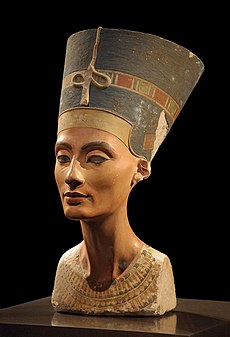
| The face that started a thousand legends. |
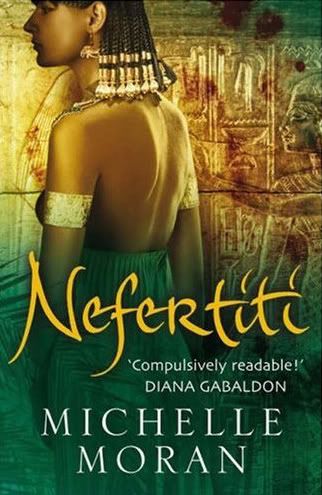
The story, however is told from the perspective of Mutnodjmet, Nefertiti's younger half sister and closest ally/friend/confidante/etc.
After some judicious Wikipediaing as I went along, it becomes apparent that this era was quite a turbulent time, with religious reform and a petulant, unstable monarch on the throne.
You know what? This is starting to sound very familiar to another book I read. You've probably heard of it, read it even: The Other Boleyn Girl by Philipa Gregory.
Let's see...
- Famous historical female figure at the centre. Check.
- Central character has ambitions to get to the top. Check.
- Story told from sister's perspective. Check.
- Religious reform. Check.
- Ambitions of a family riding on central character. Check.
- Jealousy. Check
- A rise and a fall. Check.
Ok, so it sounds like the story of this book is cut and dried. Well, it's not. And I haven't just spoilt it for you either. I imagine that this story can be told a thousand times over through out the world's history. Power struggles are rife, especially in royal courts. And the Egyptian courts of the Pharaohs are no different.
 |
| The god Horus, and Nefertiti |
The actual story also flows along at a steady pace, constructing the characters in a well-rounded way. Nefertiti herself is a strong character. Ambitious, selfish, petty, beautiful. I suppose some of the side characters were a bit 2D, but it didn't hurt anything overall. The pace was quick enough to hook me in, which I really need to keep me going in a book (easily distracted). About two thirds of the way through, the pace really picks up, and I raced through the end.
I definitely enjoyed this book. I would recommend it, if only for the historical setting which is fascinating (though I imagine should be taken with a pinch of salt...). There is a sequel of sorts, that I will probably read at some point, called The Heretic Queen. So maybe there'll be a review for that at some point...

No comments:
Post a Comment